
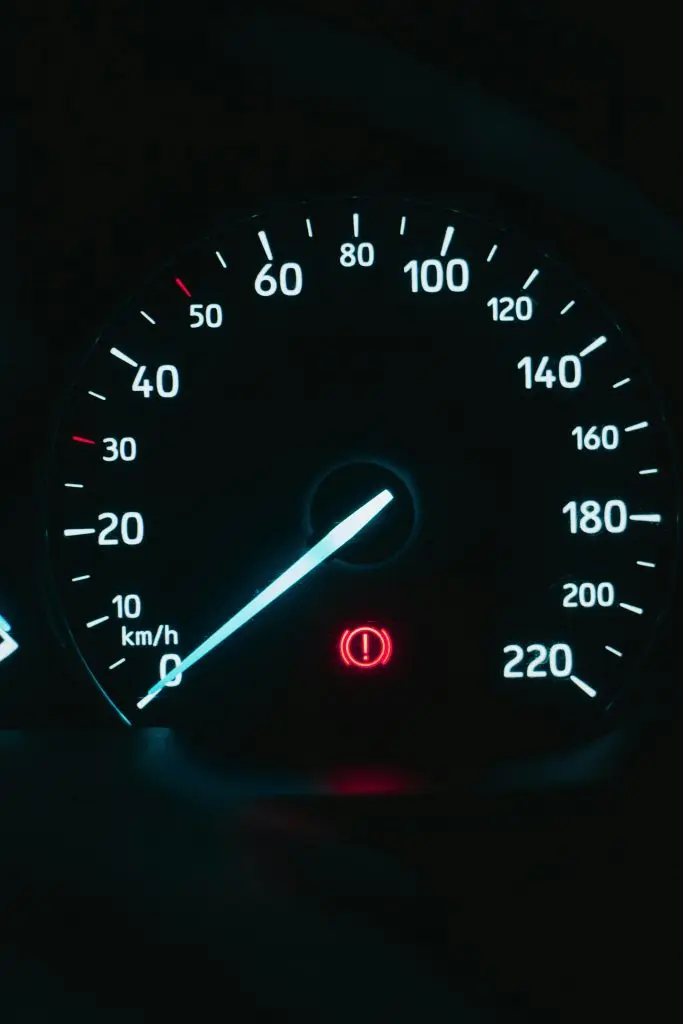
You’re driving along, everything feels normal, and then you notice it — the ABS light flicks on. A few minutes later, it turns off again. No strange noises. No warning messages. Just that light playing hide and seek.
Is it serious? Can you keep driving? Or is your car quietly asking for help?
Let’s break this down in plain language so you know exactly what’s happening and what to do next.
What the ABS Light Actually Means
ABS stands for Anti-Lock Braking System. Its job is simple but important:
It prevents your wheels from locking up during hard braking so you can still steer.
When the ABS light turns on, it means the system detected a problem.
When it turns off again, it usually means the problem is intermittent, not constant.
That on-and-off behavior is your biggest clue.
Why the ABS Light Comes On and Off While Driving
An ABS light that stays on all the time usually points to a hard failure.
But when it comes and goes, the issue is often related to heat, vibration, speed, or weak electrical signals.
Here are the most common causes.
1. Failing Wheel Speed Sensor (Most Common Cause)
Each wheel has a speed sensor that tells the ABS computer how fast that wheel is spinning.
When one sensor starts to fail:
- It may work at low speeds
- Fail at highway speeds
- Act up after the brakes heat up
What You Might Notice
- ABS light turns on after driving for a while
- Light goes off when you restart the car
- Light comes on during rain or rough roads
Even a slightly dirty or cracked sensor can cause this.
This is the #1 reason for an ABS light that comes and goes.
2. Damaged or Dirty Tone Ring (Reluctor Ring)
The tone ring is a metal ring with teeth that the wheel speed sensor reads.
Problems happen when:
- Rust builds up
- Teeth crack or break
- Dirt or metal shavings stick to it
As the wheel spins, the sensor gets inconsistent readings, confusing the ABS system.
Why the Light Is Intermittent
At certain speeds, the sensor can still read the ring correctly.
At other speeds, it can’t — and the light turns on.
3. Loose or Corroded ABS Wiring
ABS wiring runs close to:
- Wheels
- Suspension parts
- Road debris
- Water and salt
Over time, wiring can:
- Rub against metal
- Corrode inside connectors
- Become loose
Signs This Is the Issue
- ABS light flickers over bumps
- Light appears during rain or snow
- Light disappears on smooth roads
Electrical issues love to hide — until vibration exposes them.
4. Weak Battery or Charging System Problems
ABS systems are very sensitive to voltage.
If your battery or alternator is weak:
- Voltage drops while driving
- ABS module sees low power
- Warning light turns on
Once voltage stabilizes, the light may shut off.
This Is Common If:
- Your battery is more than 3–4 years old
- You recently had a dead battery
- Headlights dim at idle
- Multiple warning lights appear briefly
Many people replace ABS parts when the real problem is electrical.
5. ABS Control Module Starting to Fail
The ABS module is the “brain” of the system.
When it begins to fail, it may:
- Overheat
- Lose internal connections
- Reset itself while driving
Symptoms
- ABS light appears after long drives
- Light goes off after cooling down
- ABS light comes on with traction control light
This issue often worsens over time.
6. Wheel Bearing Wear Affecting Sensor Readings
Some vehicles have wheel speed sensors built into the wheel bearing.
As the bearing wears:
- The wheel develops slight play
- Sensor gap changes
- Readings become inconsistent
Clues
- Low humming or growling noise
- ABS light flickers at certain speeds
- Light appears more often during turns
This problem is sneaky and easy to miss.
Is It Safe to Drive When the ABS Light Comes On?
Here’s the honest answer:
Yes — but with limits.
When the ABS light is on:
- Your regular brakes still work
- ABS and traction control may be disabled
What changes is how your car behaves during:
- Hard braking
- Wet roads
- Snow or ice
- Emergency stops
Without ABS, wheels can lock up more easily.
Drive cautiously and avoid hard braking until the issue is fixed.
What the ABS Light Is Trying to Warn You About
Your car isn’t saying “Stop immediately.”
It’s saying:
“Something isn’t reliable anymore.”
Intermittent ABS warnings are often early signs of failure.
Ignoring them can turn a small sensor issue into:
- Brake system faults
- Traction control failure
- Higher repair costs
Why Restarting the Car Makes the Light Go Away
When you turn the engine off:
- The ABS system resets
- Temporary faults clear
- Sensors start fresh
But if the problem still exists, the light will return.
Restarting doesn’t fix the issue — it just resets the warning.
How to Diagnose the Problem Correctly
Step 1: Scan the ABS System (Not Just the Engine)
Basic code readers often cannot read ABS codes.
You need:
- An ABS-capable scanner
- Or a professional diagnostic scan
This will usually point to:
- A specific wheel sensor
- Voltage issues
- Module communication errors
Step 2: Inspect the Basics
Before replacing parts, check:
- Battery condition
- ABS fuses
- Visible wiring near wheels
- Sensor connectors
Step 3: Road-Test the Vehicle
Many ABS problems only show up:
- At highway speeds
- After driving 10–20 minutes
- Over bumps or during turns
A proper test drive matters.
Common Mistakes People Make
- Replacing all four wheel sensors “just in case”
- Ignoring battery voltage problems
- Clearing the light repeatedly without fixing the cause
- Waiting until ABS completely stops working
These mistakes cost time and money.
When You Should Fix It Immediately
Don’t delay repairs if:
- ABS and brake warning lights are on together
- Traction control is also disabled
- Brakes feel different
- Light stays on longer each day
These signs mean the issue is getting worse.
Final Thoughts
An ABS light that comes on and off while driving is not random.
It’s usually caused by:
- A weakening wheel speed sensor
- Dirty or damaged tone rings
- Electrical or voltage issues
- Early ABS module failure
Your brakes still work, but your safety systems are warning you.
Fixing the issue early:
- Keeps repair costs lower
- Prevents brake system problems
- Restores full control in emergencies
If your ABS light is flickering, your car isn’t overreacting — it’s giving you a chance to fix the problem before it becomes serious.