
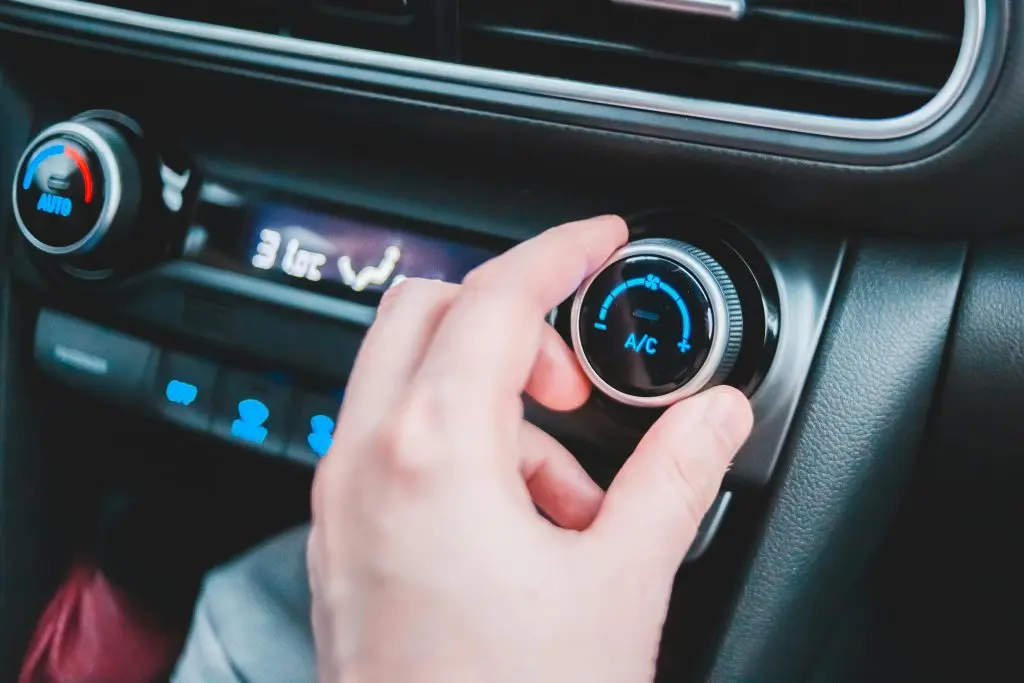
You start your car on a hot day, turn the AC on full blast, and… nothing. Warm air blows from the vents. But after driving for 10 or 15 minutes, suddenly the air turns cold. If this sounds familiar, you’re not alone. This is a common problem, and it typically indicates that something in your AC system isn’t functioning properly.
The good news is that this issue often has clear causes. The bad news is that ignoring it can lead to bigger and more expensive problems later. Let’s break down what’s really happening in simple terms.
How Your Car’s AC Is Supposed to Work
Before diving into the problems, it helps to understand the basics.
Your car’s AC system uses a compressor to pressurize refrigerant. That refrigerant flows through several parts, releases heat, and comes back cold. A fan pulls air across cold coils, and that cold air is sent into the cabin.
When everything works correctly, your AC should blow cold air within a minute or two after starting the engine—even when the car is parked.
So if it only works after driving, something is delaying that cooling process.
The Most Common Reasons This Happens
1. Low Refrigerant Level
This is the number one cause.
When refrigerant is low, the AC system struggles to build enough pressure at idle. Once you start driving, the engine runs faster, the compressor spins quicker, and pressure finally rises enough to produce cold air.
Signs this may be the issue:
- AC is weak or warm at idle
- Gets colder as you drive faster
- Cooling feels inconsistent
Refrigerant doesn’t get “used up.” If it’s low, there’s usually a small leak somewhere.
2. Weak or Failing AC Compressor
The compressor is the heart of your AC system. Over time, it can wear out internally.
A weak compressor may not compress refrigerant properly at low engine speeds. When you drive and RPMs increase, it works just enough to cool the air.
Warning signs:
- AC works better at highway speeds
- Clicking or knocking noises when AC is on
- Cooling comes and goes
If left alone, a weak compressor can fail completely.
3. AC Compressor Clutch Problems
The compressor clutch turns the compressor on and off. If the clutch is worn or slipping, it may not engage fully at idle.
Once the engine speed increases, the clutch grabs better, and the AC starts cooling.
You might notice:
- AC doesn’t engage right away
- Cold air only after driving
- Clicking sounds from the engine bay
This issue often gets worse over time, especially in hot weather.
4. Cooling Fan Not Working Properly
When your car is parked, the AC system relies on electric cooling fans to remove heat from the condenser. If these fans are weak or not working, heat builds up and prevents cooling.
Once you start driving, natural airflow helps cool the condenser, and the AC begins to work.
Common clues:
- AC works better while driving than at a stop
- Engine temperature may run slightly high
- Fans don’t run when AC is turned on
This problem is especially common in city driving or traffic.
5. Dirty or Blocked Condenser
The condenser sits at the front of your car and looks like a small radiator. Over time, it can get clogged with dirt, bugs, and road debris.
When airflow is blocked, heat can’t escape properly at idle. Driving forces more air through it, helping the AC cool again.
Signs include:
- AC cools better at speed
- Front of car has visible dirt buildup
- Cooling fades in stop-and-go traffic
Sometimes a simple cleaning can make a big difference.
6. Faulty AC Pressure Sensor or Switch
Modern cars rely on sensors to control AC operation. If a pressure sensor gives incorrect readings, the system may limit cooling at idle to “protect” itself.
Once conditions change while driving, the sensor allows full operation.
Possible symptoms:
- AC behaves unpredictably
- Cooling turns on and off randomly
- No obvious mechanical issues found
Electrical problems like this often require proper diagnostic tools.
7. Idle Speed Too Low
Your engine must spin fast enough to power the AC system. If your idle speed is too low due to engine or throttle issues, the compressor may not work efficiently when stopped.
When driving, engine speed rises and the AC starts cooling.
Watch for:
- Rough or low idle
- AC performance improves with RPM
- Engine feels weak at stops
This points to an engine tuning or airflow issue rather than the AC system itself.
Why You Shouldn’t Ignore This Problem
It may seem harmless to wait until the AC cools after driving, but this issue often gets worse over time.
Ignoring it can lead to:
- Total compressor failure
- Higher repair costs
- Reduced fuel efficiency
- Uncomfortable driving in traffic or hot weather
What starts as a minor issue can quickly turn into a major repair.
Simple Checks You Can Do Yourself
Before heading to a repair shop, you can try a few basic checks:
- Turn the AC on while parked and listen for cooling fan noise
- Look through the front grille for dirt or debris
- Check if AC performance improves when revving the engine slightly
- Notice if cooling changes in traffic versus highway driving
These observations can help a technician diagnose the problem faster.
When to See a Professional
You should get professional help if:
- AC never cools at idle
- Cooling is inconsistent or fading
- You hear unusual noises
- The problem gets worse over time
A proper AC inspection includes checking pressures, compressor operation, fan function, and possible leaks.
Final Thoughts
When your AC only blows cold air after driving, it’s not normal—and it’s not something to ignore. In most cases, the problem is related to low refrigerant, airflow issues, or a struggling compressor system.
Catching the issue early can save money, prevent breakdowns, and keep you comfortable all summer long. A car’s AC should cool you whether you’re cruising down the highway or sitting at a red light.
If yours doesn’t, it’s trying to tell you something. Listen to it.